
· Harwinder Singh · PMP
Functional Organizational Structure
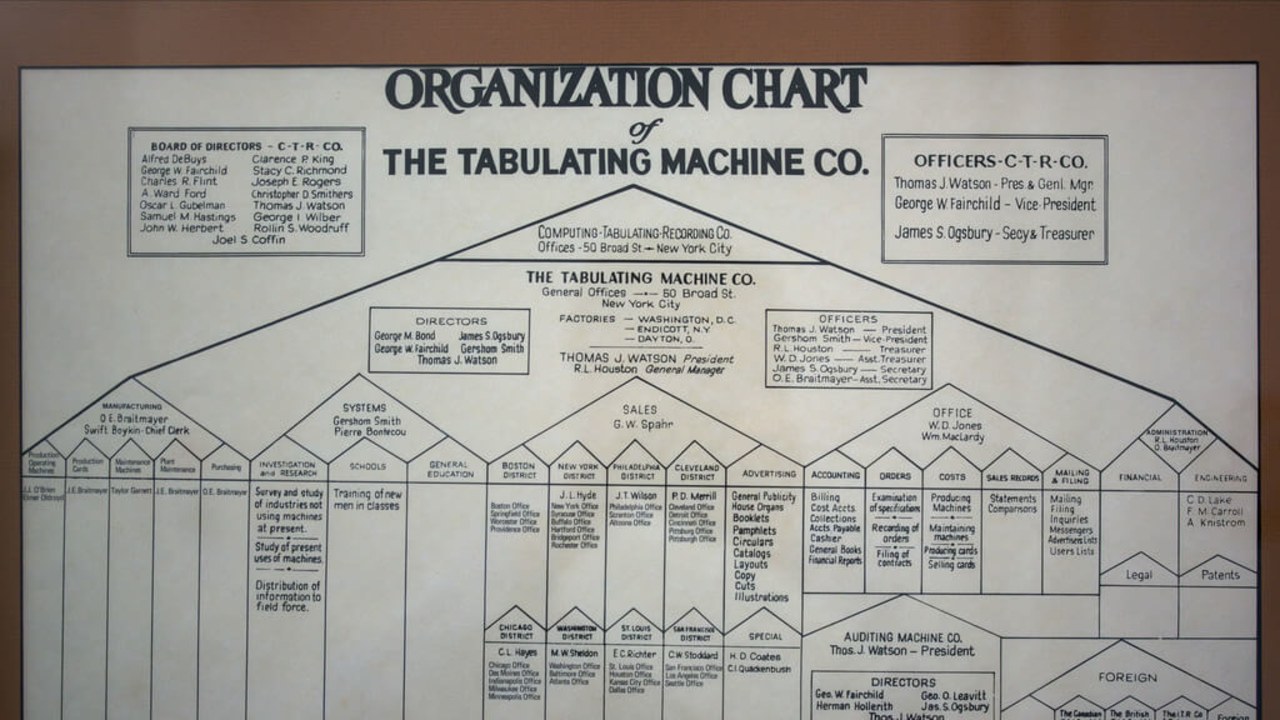
In a functional organization is the most common form of organization structure where staff members are grouped by specialty, such as engineering, manufacturing, operations, and finance.
PMP Resource Collection
A collection of Deep Fried Brain PMP study notes covering project management topics that are often explained poorly in standard prep material.

These articles cover project management topics that were not explained well in the PMBOK Guide and other PMP study guides. Many of them were written years ago, but the concepts remain relevant for PMP and often CAPM preparation as well.
When these notes were first written, the goal was simple: turn difficult exam concepts into plain-language explanations that are easier to remember and apply. This page restores that collection as a single route instead of leaving it buried inside the general category archive.
In a functional organization is the most common form of organization structure where staff members are grouped by specialty, such as engineering, manufacturing, operations, and finance.
Learn about the difference between Enterprise Environmental Factors (EEFs) and Organizational Process Assets with the help of examples and a cool new drag and drop game.
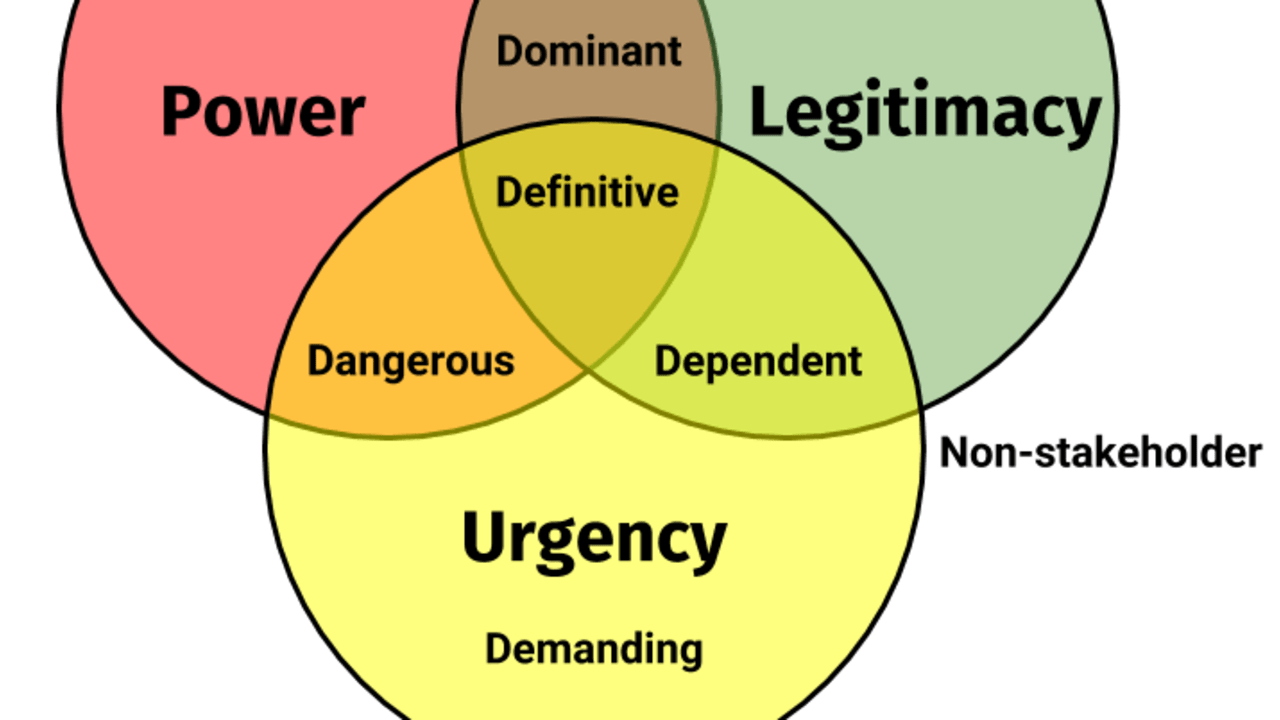
The Salience Model for stakeholder analysis and classification helps to identify the prominence of project stakeholders according to 3 attributes - Power, Legitimacy, and Urgency. It provides the project managers a systematic approach to managing stakeholder relationships.

A Pareto Chart or Diagram, one of the Seven Basic Quality Tools, is a specific type of Histogram ordered by frequency of occurrence.
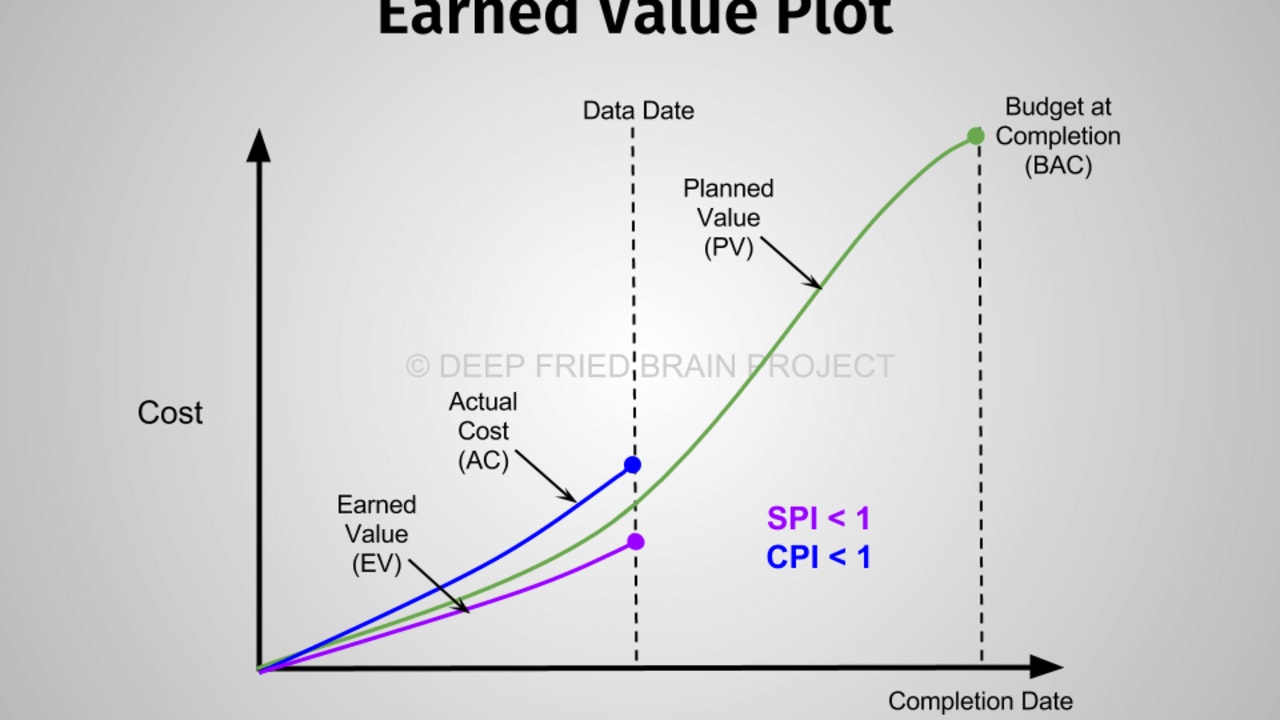
Schedule Performance Index (SPI) and Cost Performance Index (CPI) are Earned Value Management (EVM) measures for project schedule and cost efficiency in project management, and used to assess the magnitude of variation from the established schedule and cost baselines.

Learn about the difference between direct costs and indirect costs in project management with detailed examples and explanation.

Learn the difference between Discrete Effort, Apportioned Effort and Level of Effort (LOE) in project duration estimation for PMP certification.

Difference between Planned Value, Earned Value, and Actual Cost in Earned Value Management under Project Cost Management.

Mnemonics and Study Aids for PMP Certification to help memorize ITTO, Process Group and Knowledge Area names, and other project management concepts.

Understand the difference between Work Performance Data, Work Performance Information, Work Performance Reports in PMBOK 5th Edition.

The PMBOK Guide is the bible for the PMP exam. But is it really perfect? There are several errors and discrepancies in the Guide that PMP aspirants should be aware of.

Critical Path Method (CPM) forward pass calculation can start at day zero (0) or one (1). What is the correct approach for PMP exam?

Understand the difference between confusing project management terms from the PMBOK Guide for PMP Certification exam. This post is also useful for CAPM Certification.

Learn about the 5 forms of powers of a Project Manager and guidance on selecting the best form of power depending upon the situation.

Difference between Product Life Cycle and Project Life Cycle, Project Phases, and project management Process Groups defined in the PMBOK Guide.

Difference between Project Schedule and Schedule Baseline in Project Schedule Management based on PMBOK Guide.

Quality Assurance is the process of auditing the quality requirements and the results to ensure quality standards are being followed. Whereas, Quality Control is the process of monitoring and recording results to ensure standards are being met.

Standard deviation is a statistical concept that gives a measure of the duration uncertainty and risk in project time estimation.

Free sample questions on project Activity Duration Estimates covering PERT and Standard Deviation for PMP certification.

This article explains the difference between PERT and Critical Path Method (CPM) estimation in Project Schedule Management

Learn about Probability and Statistics in Project Management including terms such as Random Variables, Uniform Distribution, Beta Distribution, Triangular Distribution, Normal Distribution, Mean, Variance, Standard Deviation, and Central Limit Theorem.

What is the PERT Formula and how is it derived? How is PERT estimate calculated? Learn about derivation of PERT formula, Standard Deviation Formula, and Variance Formula.

What is Three Point Estimate? Understand why three point estimate is better than a single point estimate. Learn about probability, estimation in a range, and reserves and padding.

A detailed tutorial on Project estimation and Program Evaluation and Review Technique (PERT) in project management for PMP certification.

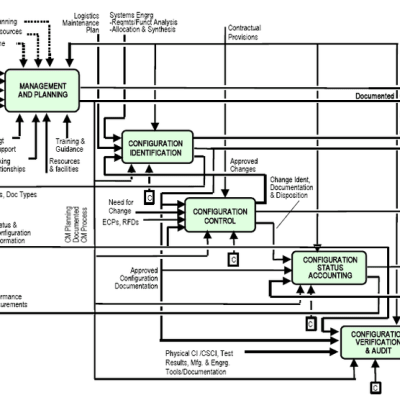
Explanation of four components of a Configuration Management System are Configuration Identification, Configuration Control, Configuration Status Accounting, and Configuration Verification and Audit.
The activities in the Closing Process Group of the project management framework defined in the PMBOK Guide are performed in a specific order. This area is testing in the PMP exam.

Difference between Configuration Control and Change Control in Project Management in the context of Configuration Management System.

An overview of Configuration Management System and Change Management System in the context of Project Management Information System. Configuration Management is focused on the functional or physical characteristics of the "product" (or deliverables of the project).

Project Risk Management Terms explained in a simplified manner for PMP certification. Terms explained include Contingency Plan, Residual Risks, Threshold, Reserves, Triggers, Tolerance, Fallback Plan, Watchlists, Secondary Risks, Workaround.

Sample questions on Network Diagram with Finish-to-Finish (FF) Dependency in Critical Path Method (CPM) for PMP Certification.

In this post, we'll compare two formulas for calculating Estimate at Completion (EAC) in Earned Value Management (EVM) as part of project cost estimation.

A challenging Critical Path Method (CPM) calculation sample question with Finish to Finish Dependency in a Network Diagram for PMP Certification.

Formula to calculate Seller Fee and Point of Total Assumption (PTA) in Fixed Priced Incentive Fee (FPIF) Contracts in Project Procurement Management for PMP Certification.

Difference between Control Quality and Validate Scope in Project Management processes defined in the PMBOK Guide, 5th Edition.

Various reasons for terminating a project - a project is terminated because its objectives will not or cannot be met, or when the need for the project no longer exists.

The best conflict resolution technique is determined based on the situation. There's no single-best or one-size-fits-all conflict resolution technique for all situations.

Key points about Point of Total Assumption (PTA) formula calculation questions in Fixed Priced Incentive Fee (FPIF) Contracts under Project Procurement Management.

Learn how the Point of Total Assumption (PTA) formula is derived and the concept behind PTA for Fixed Priced Incentive Fee (FPIF) Contracts in Project Procurement Management.

Learn about the significance of Point of Total Assumption (PTA) means in Fixed Price Incentive Fee (FPIF) Contracts and its implications on the buyer and the seller.

Work Performance Information is an input to most Monitoring and Controlling processes. It is used to generate Work Performance Measurements (SV, CV, SPI, CPI, ETC, EAC). Together, WPI, WPMs and Budget Forecasts are used to generate Performance Reports.

Performance Reports are used to communicate the project status to stakeholders. The distribution of Performance Reports is done as per the Communications Management Plan.

Work Performance Measurements are output of Monitoring and Controlling processes, and include planned versus actual performance indicators with respect to scope, schedule and cost. Work Performance Measurements are documented and communicated to the stakeholders.

Work Performance Information is an input to most Monitoring and Controlling processes and is used to generate Work Performance Measurements, which in turn help to generate forecasts.

PMP Formulas based sample questions on Point of Total Assumption (PTA) calculation in Fixed Priced Incentive Fee (FPIF) Contracts for Project Procurement Management.

Four formulas to calculate EAC per PMBOK Guide for project management and the difference between Estimate At Completion (EAC) and Estimate To Complete (ETC) in Earned Value Management (EVM).

What is To Complete Performance Index (TCPI) in Project Cost Management? In this post, we'll learn the definition of TCPI, TCPI Formula and calculations using simple examples.

Understand the difference between Total Float and Free Float in Critical Path Method according to PMBOK Guide with the help of a Network Diagram example. Learn about formulas to calculate Total Float and Free Float. Also learn how Float is a project resource.

Process Groups are "logical" grouping of Project Management processes whereas Knowledge Areas are grouping by "areas of specialization" as defined in the PMBOK

This article explains the difference between Product Scope, Project Scope, and Project Requirements with the help of PMBOK Guide definitions, simplified explanation, and real world examples.

Real-life examples of conflict resolution techniques in action from international politics that the project managers can learn from.
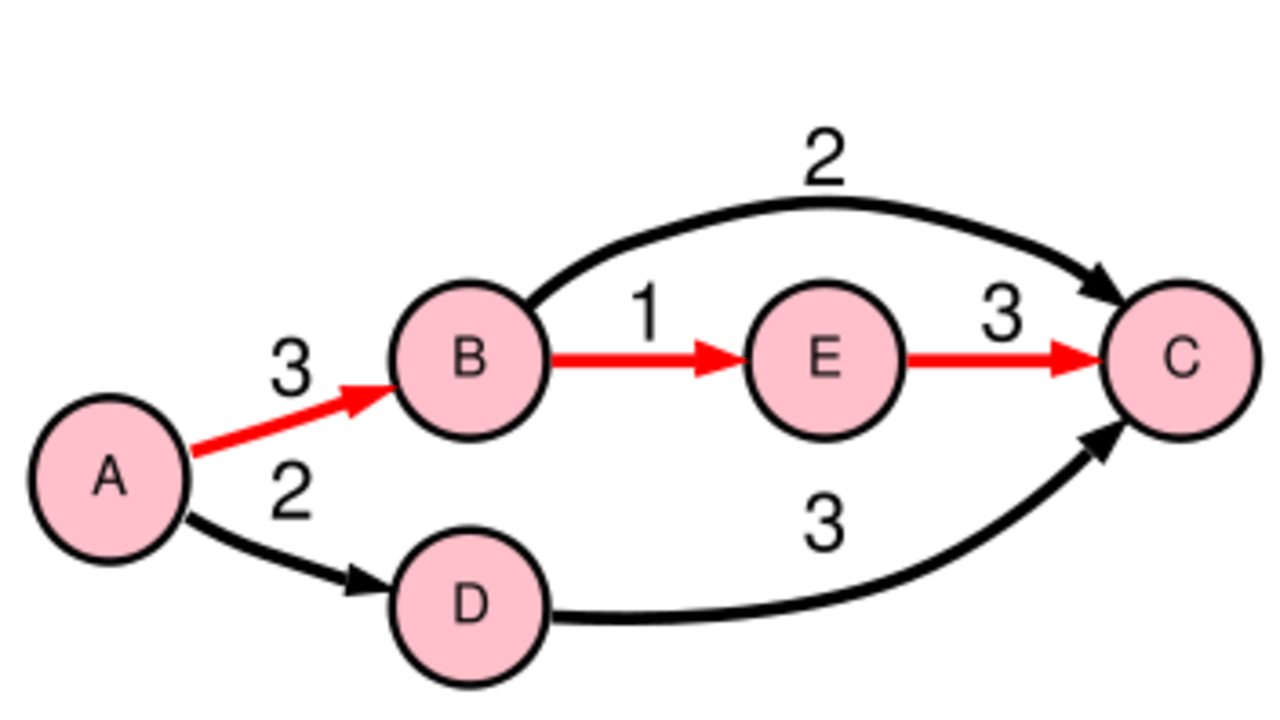
PERT stands for Program Evaluation and Review Technique. PERT is a commonly used technique along with Critical Path Method (CPM) to estimate the minimum time needed to complete a project. PERT was developed jointly by the U.S. Navy, Lockheed Martin, and the consulting firm of Booz, Allen and Hamilton working on the Polaris nuclear submarine project, in the 1950s.

What is the difference between Progressive Elaboration and Rolling Wave Planning in project management? Rolling Wave Planning and Prototyping are forms of Progressive Elaboration.

List of project management acronyms from the PMBOK Guide, 6th Edition and their full forms.
Moderated — submissions appear after approval.

Dear Harwinder, I went thru all the study notes, I found them very informative and I seem to have got a better understanding of topics like WPI and WPM. Many Thanks for sharing the knowledge .we look forward to more posts in the future. Wish you a very happy New Year 2010. In the future, I would not be surprised if a see a book in the market titled "Deep Fried Brain for PMP" kept next to a head first PMP book. :) Regards Deepak
Thanks, Deepak ! That was amusing :)
Hi Harry.. i could not find any article that deals with risk management. so i post it here under study notes.. Can you throw some light on Contingency reserve and Management reserve. I read your comments on contingency reserve in one of the post. You had mentioned, contingency reserve is used for residual risks. Residual risks are those, where there is no risk response plan or simply known-unknowns. I would like to know on what basis the contingency reserve fund will be estimated, as we dont know the impact of the risk we have identified. Also, concepts behind management reserve.
Hello Suresh (Chelluri), This question has been asked so often that it warrants a separate post of its own. Watch out for a new article on this within next week. To give you a quick answer, you are right that Residual risks are "known unknowns". But remember that "known unknowns" are actually "known" risks. Similarly, "unknown unknown" are actually "unknown" risks. For Residual risks, it's not that we don't know the impact. We do know the impact, but we do nothing to eliminate the Residual risks or reduce their impact. Therefore, we do have sufficient information about them to make an estimate of the potential impact, and the reserve (time and money) needed to address the impact, if the risk occurs. In summary, Contingency Reserves are for Residual Risks ("known unknowns" or simply "known" risks). Management Reserves are for "unknown unknowns" or "unknown" risks. Hope that helps. I recommend that you study the Risk Management chapter from Rita Mulcahy's book.
Hi Harwinder, Thanks a lot for keeping up the good work. I have a quick question Page 169 of rita 6th edition shows that after comparing WPI and WPM using variance analysis, change/correctiveaction request goes to inegrated change control and once change request is approved, IT GOES TO DIRECT AND EXECUTION FOR ACTUAL WORK. POINT I DONT UNDERSTAND IS WHY AFTER APPROVING THE CHANGE (FROM INGREATED CONTORL), IT GOES BACK TO CONTROL SCOPE. effectivtly "approved change control" is the input of control scope. Please clarify. thanks Pradeep
Harwinder, If get a chance, please clear the doubt. Thanks Pradeep
In response to the question from Pradeep. If I am right Next step after ICC approved is baseline update (so request is returning back to Scope Control) Direct and Manage Execution implements the approved changes
Hello Pradeep, First of all, my apologies for the delay in responding to you. I was caught up in several things and didn't even get a chance to look at my own site for the past 3 days. You have asked a great question. The response from 'Anonymous' is absolutely correct. When change requests are approved, it's logical that baselines need to be updated, and baselines are updated in the Control Scope process (read section 5.5 Control Scope on page 125 of the PMBOK Guide, Fourth Edition). But, I see a problem in the PMBOK Guide, Fourth Edition. The approved change requests are coming in as inputs only to the Direct and Manage Project Execution process, but not to the Control Scope process. If you refer to figure 4-11 in the PMBOK Guide, Fourth Edition, there's no output coming from 4.5 Perform Integrated Change Control into 5.5 Control Scope. Similarly, in figure 5-14, there's no output coming from 4.5 Perform Integrated Change Control into 5.5 Control Scope. Therefore, while it is logical that when change requests are approved in the Perform Integrated Change Control process, the baselines need to be updated in Control Scope, the PMBOK Guide seems to missing this flow of data. Rita's book is correct in this respect. I hope I've not confused you more. I'm open to discussion. I don't claim to know everything, but I'll share whatever I know. Feel free to post more queries. Thanks.
Hi Harwinder, Could you please help me to clarify on couple of questions from Oliver Lehmann 75 questions online. As I won't be able to provide the diagrams for the questions,please refere to website for the acuatl question and diagram. Q 18. Need an explanation why Option A is not correct. Q 31. Based on my understanding, the answer is 43 days, but I didn't see this option is provided. Q 75. Complete out of my knowledge. Appreciated your help if you could provide a detail explaination of such questions.
Hello Giri, Q.18 Option A is not correct because the float of Activity B is 9 days. Activity B ends on the evening of day 21, and activity D begins on the morning of day 31. If you count the number of days in between - 22, 23, 24, 25, 26, 27, 28, 29, 30 - you have 9 days. Q.31 Answer is 37 because: a. Activity 1 has a duration of 20 days. So, let's say it's starts on Day 1 and completes by the end of Day 20. b. Activity 2 has a duration of 10 days. Let's say it starts on Day 21 and completes by the end of Day 30. c. Activity 3 has a duration of 5 days. Relation between Activity 2 and Activity 3 is a Finish-to-Finish relation, with a lead of 2 days (FF - 2d). That means Activity 3 must finish 2 days before Activity 2 finishes. Therefore, Activity 3 must finish by the end of Day 28. d. Activity 4 has a duration of 6 days. Relationship between Activity 3 and Activity 4 is a Finish-to-Start relationship with a lag of 3 days (FS + 3d). Therefore, Activity 4 can only start on the morning of Day 32 (3 days after Day 28) and completes by the end of Day 37. Therefore, the minimum duration is 37 days. Q.75 Now this is a tough one for me. This is definitely way beyond the scope of the PMP exam and I wouldn't bother about it at all. But, I'll try to answer anyway, though I'm not 100% sure. The relationship between Activity E and Activity F is FS-60%. That means Activity F can start when Activity E is 40% complete (60% lead on the predecessor). Now assume that the duration of activity E is 10 days, duration of activity F is 4 days, and Activity E starts on Day 11. So, Activity F can start on Day 15. Activity F may complete by end of Day 18, but Activity E can only complete by the end of Day 20. Refer to this Project Schedule / Gantt Chart I created to explain the scenario: Logical Dangle in a Network Diagram So, it's likely that Activity E may go beyond the project end date (as seen in my project schedule / Gantt Chart above). If that happens, it would be a logical dangle. Hope I've answered all your questions. You can also post these questions in forums to get better responses.
Hi Harwinder, Thanks a lot for your eplanation, now I am able to figure out where I am doing wrong. Appreciated your help. Regards Giri.
Hi Harwinder, I am trying to analyze the Q 18, Here can't we apply the formulas. Free Float = ES of Next activity - EF of Present. If this forumula is used,i.e FF of Activity B => 31 -10 = 10 days, then the Free Float is 10 days. Could you please clarify me on the above. Regards Giri.
Hello Giri, The free float formula that you mentioned is applicable when you start counting the project start date from day 0, and the successor starts on the same day when the predecessor ends. Refer to Rita Mulcahy's book for this method. I also used the same approach in my examples in the study notes above. In Q.18 of Oliver Lehmann's exam, a different approach is used for calculation of early/late start/finish dates. Question clearly says that an activity starts in the morning and finishes in the evening, and the next activity starts on the next day. In this case the formula would be: Free Float = ES of successor activity - EF of predecessor activity - 1 In conclusion, keep in mind that the formulas will change depending upon the approach you follow to calculate the early/late start/finish dates. Therefore, it is best to understand the concepts and leave the formulas in the book. Regards.
Harwinder, Thanks a lot for the explanation. Regards Giri.
Hi Harwinder, Could you please help to answer the below question. A task was scheduled to use two persons, full time, and take two weeks to complete. Instead, the project manager was only able to assign one person to this task. At the end of two weeks, the person assigned to the task was 75% complete. What is the cost performance index? a. 0.75 b. 1.5 c. 1.33 d. .5 Regards Giri.
Hello Giri, This question can only be answered by the person who developed it. I can't calculate the CPI without knowing the Actual Cost (AC). Where did you get this question from? P.S.: My name is 'Harwinder' :) Regards.
Giri, On second thoughts, if we assume that the human resource cost is the only cost involved for the task, then my answer would be 'b' (1.5). Suppose the cost of each resource is $500/week, and human resource cost is the only cost involved. Therefore, original cost estimate (BAC) = 2 * 2 * $500 = $2000 = PV at the end of 2 weeks. Actual cost at the end of 2 weeks is = 2 * 500 = $1000 (because only one resource was used). Earned value = 75% of $2000 = $1500. CPI = EV / AC = $1500 / $1000 = 1.5 I hope that answers your question.
Hi Harwinder, Your assumption is correct for my earlier question. That is a bit difficult to assume for such questions. These questions are from http://pmpbank.googlepages.com/pmpquestionbank . If possible, could you please hlep to look into the question no:42 - 50. I have doubt on the question no 43 (I cannot find my answer (FreeFloat=5)in the options provided) ,48 (My answer is ES = May 7) & 49 (My answer is Increase one day) which are not tallying with the answers provided on the website. Could you please help me to clarify on these questions. Appreciated your help. Regards Giri.
Hello Giri, My answers are exactly the same as yours and I'm quite confident we are right. You can post this in some forum and seek opinion from others as well, if you have time. Otherwise, just move on. Good luck.
Sir, Please could you provide tips how to address various situational questions in PMP coz some cases you can see two choices almost the same for example When asked about what to do FIRST? When asked about what is the LEAST important thing to do? What is the BEST things to do? What PM FORGOT to do ?
@ Anonymous: This is one of the best questions posted on this blog. If you could narrow down each question to 2 options, then you have won 80% of the battle. How? Because that itself would bring your score to 50% and generally you need to score about 56-66% to pass the exam. So, you just need another 6-16% score to tilt the balance in your favor. Now to answer your question directly, after you narrow down to 2 options, you can use the following tips: 1. Think the PMBOK-way. 2. Read the questions very thoroughly, and keep an eye for these keywords that you mentioned. 3. Try to remember the order in which the activities in the planning process group are performed. The planning processes have a particular order, which is important. So, if you keep that order in mind, it may help you figure out what to do NEXT. 4. PMs don't rush to others with problems. They propose solutions. So, if the question asks you what is the FIRST thing a PM should do, and the answer option is "go to the sponsor or customer", then be vary of that option. It's a potential trap. A better option would be something on the lines of "analyzing the problem" (to validate the problem first). 5. LEAST important thing would be something that doesn't address the problem at hand, or doesn't address it in a timely manner. 6. FORGET? Perhaps something that is part of the process but not followed. For example, the scope was increased, but the plan was not updated, or something was not communicated to an important stakeholder, or an important approval or check was missed, etc. These are just some thoughts on the top of my head. I really liked this question. I would probably do more research on this topic and do a separate blog post on it shortly. Thanks !
Thanks for quick turn around and appreciating my question :). I will try to solve those situational questions (practise exam) using your tips. Then i will come back to you with more samples :)
These are great questions. First, be careful with phrases like, "PM always …and never …". I believe that approach can trip you up on projects and on the exam. In fact, some practice test questions use wording specifically to try to get you to respond based on a dependable PMI principle. But the real goal of the question is to make you think and answer based on the situation. You are correct that a PM would not jump into root cause analysis first. Generally root cause analysis involves figuring out the BEST choice. But other questions ask what you should do FIRST. NEXT and FIRST are equivalent in terms of situational questions and usually involve the sequencing and in which a PM plans or acts. BEST generally involves analysis and determining a complete solution. MOST usually refers to the multiple correct answers offered, directing you to choose the MOST appropriate response. Here is an example: You notice the wrong rocket fuel is being delivered to the launch pad. This fuel was taken from an untested portion of the inventory and could cause dangerous results. Liftoff is in 30 minutes. What should you do FIRST? 1) This a technical issue. Rely on your engineers to make the appropriate correction. 2) Audit your quality control process to determine why untested fuel was delivered. 3) Submit a change request to correct the fueling process and prevent this mistake from happening again. 4) Call mission control and tell them to stop the fuel delivery. The answer is #4. Sure, investigating how this happened and preventing it in the future is critical. But that does not help the people sitting in the rocket. Sometimes the question is asking about safety, ethics, or immediacy and not about doing thorough analysis. These questions often ask what should be done NEXT or FIRST. http://markpreynolds.com/pmp/tips Author: mark Comment: Feel free to post wherever helpful. If you include the link to this page, it will allow the discussions to continue.
Hello Mark, That's a wonderful response. Thanks for sharing your insight. I also want to mention that your site has some really useful material for PMP certification. I plan to do a separate blog post on this topic and have already started working on it. Keep in touch. Thanks.
Hi Harwinder, Could you please help me to understand the questions 17,37,54,81,165 from the website http://pmpbank.googlepages.com/pmpquestionbank . Thanks a lot for your help. Regards Giri.
Hi Harwinder, Could you please help me to answer the questions posted here on Feb 25th 2010. Appreciated your help. I am so sorry for wasting your time for such questions. Regards Giri.
Hi Giri, Sorry for not being able to keep up with all the comments and questions here. I suggest that you post specific doubts that you have about these questions and show me how you approached them. From there, I'll help you fill the gaps. BTW, I do not trust the answers on this website. So if you are getting a different answer, you might be right. Regards.
Pls, could you detail the flow of the planning processes? The order to follow, first, second, etc. Until now I've only read the PMI/PMBOK. Thxs.
Hello Vanina, The order of the planning processes is pretty much the same as shown in the "Planning Process Group" column on Page 43 of the PMBOK Guide, Fourth Edition, starting from the top. Note that Planning process group is the only process group where the order of processes is important, and it is logical too. For example, you cannot write a scope statement, unless you have the requirements. You cannot have a Network diagram without knowing the scope or having a list of activities to accomplish the scope. Similarly, you cannot create a budget, without knowing the cost for each activity. You cannot start to plan procurements unless who understand what needs to be procured. Also note that, the processes in the Planning Process Group are iterative. You may need to repeat the processes as you go further during planning. For example, during Risk Response Planning, you may decide that you need to add some extra activities to the project in order to deal with the risk. So, this may require you to go back and update your activity list and repeat all the downstream processes. I hope you get the idea. I suggest that you grab a good study guide to complement the PMBOK Guide. Let me know if you have further questions. Regards.
Hi Harwinder, Had a question on the Identify Risks process input 'Scope Baseline'. If you compare this to Plan Risk Management and Perform Qualitative Management processes wouldn't it have been more appropriate to have used Project Scope Statement? Regards, Ashwin
In regard to question from Ashwin regarding "Hi Harwinder, Had a question on the Identify Risks process input 'Scope Baseline'. If you compare this to Plan Risk Management and Perform Qualitative Management processes wouldn't it have been more appropriate to have used Project Scope Statement?" I guess my answer is WBS due to the following reasons a) Allows to monitor risks at package and control account level b) WBS is a basic input for all planning process after scope baseline has been created
Hello Ashwin, That's a really good question and shows that you are a keen observer and taking your preparation very seriously. Your question has been already addressed by another reader above (thanks to him/her). Let me add some additional comments. The difference between Scope Baseline and Project Scope Statement is really the WBS (and the WBS Dictionary). So, I would rephrase your question this way: Why is the WBS an input to Identify Risks process? I think it's quite logical. I'll take an example to explain. Assume that your WBS is deliverables based. Let's say you are building a product based on a new technology. During risk identification, you find that one of the deliverables in the WBS is too risky to build right away. In order to mitigate the risk (under Plan Risk Responses), you decide to add a new (internal) deliverable, which is a "prototype" of the product, to your WBS. Just looking at the Scope Statement, you may not know whether the team has planned to build a "prototype" or not. Only by looking at the WBS, you could figure this out. Similarly, there may be other risks in the WBS. How about an incomplete WBS itself? I hope I've addressed the question. If I've missed something, please feel free to correct me. Again, that was a good question and I encourage people to ask more of such questions. Thanks.
Thank you Harwinder and the anonymous friend; I appreciate the time and effort in your responses. So would it be correct to assume that when we are within the 'Plan Risk Management' process we are not planning at the WBS or to put it differently Risk Management Plan is not developed at the WBS Regards, Ashwin
Hi Ashwin, Yes for the purpose of passing the exam. "Plan Risk Management" is about how you'll approach risk management. It's not about finding risks or addressing them (those happen in other processes). So, you don't really need the WBS at that point. But remember that PMBOK Guide is a set of "guidelines", not a "methodology". On a real project, if you need to refer to the WBS for planning risk management, there's nothing stopping you from doing it. There are no hard and fast rules here. Hope that helps.
If a new risk is found during Monitoring and Control risks will it go back to qualitative analysis or identify risks before response is planned
@ Anonymous: In response to: "If a new risk is found during Monitoring and Control risks will it go back to qualitative analysis or identify risks before response is planned" I think it depends on the situation. If you have already identified a risk, logically you would go to Perform Qualitative Risk Analysis. But let's say you suspect there could be more underlying risks. In that case, you may want to repeat the Identify Risk process again. For such cases, there's no single "best" way to do things. PMBOK Guide is a set of "guidelines", not a "methodology". The PM has to tailor the guidelines according to the needs of the project and the demands of the situation. Regards.
Thanks for quick round. In btw i found good presentation regarding PMIisms. https://docs.google.com/present/view?id=0Ad-YPyiSjKxfZGZkcjZ2dzlfNzExdmZ0OHZqang&hl=en
This kind of response confuses me. I just had responded that it should inform the client. "Answer A is incorrect: it is supposed to report the problem to the customer when it happened. This happened should not be news to the client at the end of the design phase." The correct answer is to do a lessons-learned meeting at the end of the phase.
Regarding Professional and Social Responsibility, for the exam, how to know what to answer (the best PMI answer) in specific cases. For example, if I have to comment something first to the customer, to my boss/ manager, to the PMI, or to another one. Do you have examples about it?
Hello Roberto, Sorry for the delay in responding to your question. I didn't understand your example clearly. Can you elaborate it further? I promise that I'll respond sooner this time. Generally speaking, we need to understand PMIisms (PMI way) to answer questions on Professional Responsibility. I got 100% on this domain in my PMP exam. The trick I used was to always go by the "rules". For example, even if my real brother does something unethical, I simply "report" him to the authorities. I should not give him a second chance. If my boss asks me to do something unethical or unlawful, I should go against him, and not only stop him, but also report him to the authorities. This domain is a good scoring opportunity if only we understand the trick to answering the questions. Thanks.
Who bears the training the expense when a project team member requires training to complete the job a) Project Manager b) Functional Manager c) Project Funding As per Rita PM fast track project bears the expense whereas per Andy Crowe book training expense should be borne by performing organisation or functional manager and not by the customer or project. Please can you throw your views ?
@ Anon, Regarding your question about the cost of training, I don't think there's a single best answer for all situations. If the training is very specific to skills required on the project, the project may bear the cost. Otherwise, it may be borne by the performing organization. For example, if I want to build my project management skills, and my company sends me for a training, it's unlikely that the cost will be borne by my current project. But if I need a specific technical training to complete my job on my current project, the money is likely to come from the project budget. Hope it helps.
Hi Harwinder, Is it possible to provide a detail brief notes on Close Project or Phase & Close Procurements. Mainly the sequence of Steps followed to Close Project or Phase & Closse Procument e.g., Release Team is the last step to be followed in the Close Project. There were lot of Questions getting confused around this area. Appreciated your help. Regards Malli
Hello Malli, That's a good suggestion. Let me look into it. Thanks.
So one question I have is how many EAC formula are required for the PMP exam? According to Andy Crowe, you only need to know one: EAC = BAC/CPI. But according to other study guides I've used, there are three different scenarios for EAC, the other two being: EAC = AC + new ETC (when original estimate was flawed) and EAC = AC + (BAC - EV) (use when current variances are not expected to continue). Is Crowe correct in limiting the requirement to just EAC = BAC/CPI?
Hello Sir Chawlz, Read the following 2 articles on this subject: Estimate At Completion (EAC) vs Estimate To Complete (ETC) Solving the Estimate At Completion (EAC) Puzzle In short, it's good to have understanding of all 4 formulas. But generally, the formula related questions on the PMP exam are straight forward, and you may be able to get by with the basic formula that you mentioned. Good luck.
Hi Harwinder, Could you please help me in clarify me on the second question of online Oliver-lehman 75 questions on NPV http://www.oliverlehmann.com/pmp-self-test/75-free-questions.htm My calculations are coming in a different way. Project 1 is coming up with negative NPV where as Project 2 is +ve greater > 1. So it is not talling with the answer provided. Thanks Gopi.
Hi harwinder, Can you tell me if the PMO can manages portfolio scope? And what are the difference between PMO & Progam management, PMO & Portfolio Management. Thanks.
Hi Harwinder, Would you please explain the difference between Scope Creep and Gold Plating. I m confused between these 2 things.
I've seen different explanations in different books. Here's what I came to understand: Scope creep = when additional things get added to the scope unintentionally that negatively impact project delivery. For example, you add an extra feature without accounting for its dependencies and suddenly you're scrambling to manage those unplanned for things as well. Gold Plating = When you deliberately try to add something beyond the scope and it may or may not have negative consequences. For example, the project may be ahead of schedule and you want to please the sponsor and key stakeholders so you try to develop an extra feature. Dangerous, could result in scope creep and should not be done. So in a nutshell, Scope creep is the result and gold plating is the intention.
Hi Harwinder, I really appreciate putting up such an awesome blog. I would appreciate if you could put up articles on the following topics in the simplified language you always adhere to as compared to other prep materials where the matter seems so complicated. 1) Powers of a project manager. I know what they are but dont know how to apply them in situations. Could you provide examples. 2) Conflict resolution techniques: Same point like above. Especially just cant understand the fine difference between this first set smoothing and compromising annd the other set of colloborating and confronting. 3) Difference between parametric estimating and analogous estimating. The difference seems to be so thin especially since both look at past projects. 4) Finally, I have read the PMBOK and Ritas chapter on risk management as well as your article. I am all fine till Quantitative Risk Analysis.However I dont understand the finer details of Plan Risk Responses. I seem to get confused with questions like : Are risk responses implemented in the planning process group itself or the executing/ monitoring process group? Are responses implemented after the risk happens or before it does? Where does contingengy plans come into picture? Are contigency reserves linked only to contingency plans alone or also to other response strategies like transfer, avoid, mitigate etc? What is the link between triggers and contigency plans? If you could take an example of an IT project and start right from the Plan Risk Responses phase with 7-8 risks and a response strategy for each one of them (like Transfer for one, Mitigate for another, Exploit for another etc) and go through the entire Planning/Monitoring/Executing process of Secondary Risks, implementing contigingency plans, using contingency responses, workarounds etc that would be really appreciated. I know I am asking for too much but honestly like many others have very little PM experience. So really look out for articles from you. Thanking you sincerely.
Hello Anon, Thanks a lot for your comments and truly fantastic feedback. I particularly liked your questions on risk management. I wish I could work on all the ideas right now. But given my schedule and other priorities, I can spend a limited time on blogging. I maintain a log of ideas, which come from readers like you and other sources, and process them one by one. For example, right now I'm working on a series of posts on PERT estimation. That idea also came from a blog reader who asked me to explain standard deviation concept. In short, I'll definitely work on each of your ideas, but it may not be in time for your exam. However, I'll try to get you the "short answers" soon. Regarding your question on Conflict Management, I do have an article What can Indo-Pak Conflict Teach PMP Aspirants that might address it to some extent. Also, I encourage other readers to answer your questions. I'm sure I can benefit from their knowledge too. If you have other suggestions, feel free to post them. I really value them. Thanks.
Hi Harwinder, Thanks a lot for your reply. I am not planning to give my exam for the next 3-4 months .So I guess you might be able to come up with the articles. If not no problems. If you could point me to other articles too that would be fine. Just had one other question to add to the list. It looks like a preventive action is used to reduce project risk and so is a risk mitigation plan? Can you kindly give an explanation for the difference between the two with an example of each. I just finsihed reading your article of Work performace info, measurements and perf. reports. I want to thank you for explaining the subject matter in such lucid language. I also read your article on not putting copywritten questions. I am having doubts on the answers to Rita's questions and if I just quote the question number would that be fine for discussion? Moreover is this the place to post such questions or do you have a seperate section to do so? Finally, once I am done reading your study notes articles what is the next place I need to look for more articles regarding project management on your site. Thanks once gain for all your help.
Hello Anonymous (I wish you could use a proper name, even if it was a fake one), Thanks for your feedback. I'm relieved to hear that. It gives me some breathing space. I want to finish the series on PERT estimation first, that I'm working on right now. Couple off the top comments about the difference between 'preventive action' and 'risk mitigation plan' - one is an 'action' and the other is a 'plan for action'. Preventive action may be for problems, and not necessarily for risks. These are good questions. Keep them coming. I spent a lot of effort on the WPI / Performance Report articles. I'm glad to hear that you found them useful. It makes all the effort worthwhile. Currently I do not have any place to discuss exam questions. There are 3 reasons for it: 1. Blogger platform is not ideally suited for it. Forums are the right place for them. 2. I can start my own forum, but I don't want to bite more than what I can chew. I already find it difficult to keep up with the blog activities. I don't have any helping hand here. 3. These things can tread into copyright issues, and I want to save myself from having to deal with it. But your comment has made me to rethink. Let me see if I can find an effective way to incorporate it into this blog. Regarding other articles, you can click on the "SITEMAP" link in the top menu bar. That'll show you all the blog posts in one shot. Thanks again. I appreciate your inputs.
Hi Harwinder, Hi All, I just did the 25 tough questions from PMP Zilla and only got 12 right (48%) (http://pmzilla.com/tough-25-questions) . I am not sure if these questions are the real rep. of the actual questions or are they more difficult or less. Nonetheless I got the following questions wrong and if someone could give detailed answers to the right choice and why it is the right choice it would be appreciated. Qs 1) For a software project the team is functionally separated. Project managers belong to different departments. They are working in isolation and you are very concerned about communication gaps, as some requirements may not meet customer needs. How will you BEST address this? Organize team building session for the project managers Discuss the issue with each project manager and assign a dedicated communication manager Create a portal for sharing information and let everyone keep in touch using technology Ask the sponsor to use his veto power to solve this issue. Qs 2). For a software project the team is functionally separated. Project managers belong to different departments. They are working in isolation and you are very concerned about communication gaps, as some requirements may not meet customer needs. How will you BEST address this? Organize team building session for the project managers Discuss the issue with each project manager and assign a dedicated communication manager Create a portal for sharing information and let everyone keep in touch using technology Ask the sponsor to use his veto power to solve this issue. Qs 3) the following about Risk Management are true, Except Organizations have attitudes towards risk that affect the accuracy of the perception of risk and the way they respond Unknown risks cannot be managed proactively, hence contingency plans are used. The attitudes towards risk and risk tolerance or organizations are important. However they don't influence project management plan Careful and explicit planning enhances the possibility of success of five other risk management processes. Qs 4) your work you find out that a fellow project manager is billing the customer for work which was never done. He explains you that he will eventually complete the work, but since he has to meet his quarter targets, he is doing advance billing. You report this to your department head, as you think this is unethical behavior. Which of the following best describes this? This is called whistle blowing since you are reporting unethical behavior This is called compliance to PMI code of conduct. Since he will be completing the work it's not unethical and you should not waste time on this. Practically it's ethical, so you should not be reporting this. I will be posting other questions in a new post not to make this post too cramped up and lengthy. Thanks, Sandy
Please help to understand the difference between accuracy and precision in respect to quality
Hello Anonymous, You can find the answer here: Accuracy vs Precision. Let me give an example as well. Suppose 4 different manufacturing lines are producing cylindrical rods with diameter 3.00 cm. A random sample of 10 rods is taken from each line. The measurements are: Line 1: 3.05, 3.25, 3.40, 2.55, 2.45, 3.15, 3.00, 3.35, 2.85, 2.80 These are neither precise, not accurate. Line 2: 2.45, 2.40, 2.50, 2.40, 2.45, 2.45, 2.50, 2.40, 2.45, 2.45 These are precise, but not accurate. Line 3: 3.15, 3.10, 2.90, 2.85, 2.90, 2.95, 3.00, 3.05, 3.05, 3.10 These are accurate, but not precise. Line 4: 3.05, 3.00, 2.95, 2.95, 2.95, 3.05, 3.00, 3.05, 3.05, 3.00 These are accurate and precise. Hope that helps.
Hi Harwinder, Good explanation for difference between Precision and Accurary. Could we also have articles like these on: a) Difference between Quality Assurance and Quality Control. b) Difference between Project Schedule and Schedule Baseline. c) Difference between Analogous and Parametric Estimating. d) Difference between (or also an article on) Resource Calendars and Resourcer Histograms Thanks, Francis
Hello Francis, Thanks for your feedback. These are fantastic ideas for blog posts. You'll surely see some posts on these topics. I'll probably start with QA vs QC. Stay tuned. Thanks again.
Hi Harwinder, I had the following two questions. Most of the other doubts I had is almost as the ones posted by Francis above. a) I understand the Earned Value Management formulas but what is the difference conceptually between Earned Value VS Performance Reviews VS Variance Analysis? b) I understand that the objective of Distribute information process in Communication Management is to distribute performance reports to the stakeholders. What I dont understand is that as per PMBOK's wordings, the Report Performance process also does the same thing. So I cannt decipher the difference between the two processes. If you can even point me towards an article on these topics till you come up with your own blogs that would be great. Thanks, Victor.
Hello Victor, Awesome stuff, really. I think I need a month's break from work to clear the backlog now. I've already started working on your ideas and you'll soon (hopefully within a week) see some posts on these topics. I don't like to do half-baked posts. Will post something that you guys find useful and appreciate. I don't have any specific links on these topics right now. Google search would be your best bet. I also want to encourage you to share ideas and help each other. You don't have to wait for me to answer every questions. Please continue the discussion and try to help each other. Your inputs are really appreciated. Thanks.
Hello Sandy, Francis, Victor and other readers, Did you think I ignored your questions? Not one bit. Though I haven't worked on most of your questions, I have been looking around for a good discussion forum to support this blog. I evaluated various options like free forums, Google Groups, etc., but found some limitations with each of them. Finally today I created a new http://www.facebook.com/pages/Deep-Fried-Brain-PMP-Certification-Blog/140421435993203 on Facebook. It has a Discussion board tab, which we can use for discussion of course. I've never been big on Facebook, but I wanted to give it a shot. I just created a page, and already have one fan, which is me of course :) Jokes apart, if you support the initiative and engage in meaningful discussions, we can make it a huge success. I invite you to join the fan page and continue the discussion there. If you get a chance, you can post your questions there, or I'll do that for you anyway. Hope to connect with you on Facebook soon. Thanks.
Hi Harwinder, I'm going through the ITTOs and have trouble with the below. Hope I can get you to share some thoughts on these. 1) Difference between Project Documents and OPAs. My view is Project Documents are a subset of OPA since OPA includes "project files". So in essence any output stating "project document update" is an "OPA update". But another part of me thinks that OPA only includes archived project file. Living project files are just called project documents. That's why most OPA updates appear near Monitoring & Controlling processes and project document updates appear throughout. Any thoughts you can share on this would be great. The reason I'm asking is because I wouldn't want to differentiate between "project document updates" and "OPA updates" in my guided/misguided attempt to memorise the ITTOs. 2) I find that EEF is input to most Planning processes but very little/none of Monitoring and Controlling processes. There're some exceptions like Planning processes of Scope Management, the specific process of Sequence Activities, etc. I can understand why EEF is input to those processes that PMBOK mention, but I can't think of why EEF are not included in the others? Can you share your thoughts on why is that? Thanks.
Hello Rookie, These are very good questions. I'll give you my thoughts. I've not done any research into these areas. 1. Project documents remain project documents unless they are shared at the organization level. When they are shared across the organization, they are considered OPAs. 2. EEFs have the most impact on the project planning processes. In M&C you are ensuring that the project is being executed to the plan. And don't confuse Process Groups with Project Phases. Moreover, PMBOK is not as black and white, as you might think it is. I know of several things in the Guide that are very hard to explain with logic. Hope it helps. Thanks for your insightful comments.
Thanks Harwinder for the response. Keep up the good work of contributing back to the community. I think you should start on a PMP exam prep book as I feel your blog is easy to understand, honest and straightforward. The most important thing is you're keen on interacting with us and that separates you from the busy commercialised authors out there. I'm sure all of us readers will be the first to promote your book. Yes I agree with you there're many things in PMBOK that remain illogical or not well explained. For one, they could have simplified things. Some of them are - Don't separate between scope baseline and project scope statement as input to subsequent processes. This also goes to other "splitting the hair" inputs and outputs. Anyone trying to memorise ITTO will know exactly what I mean :). - EEF and OPA should be input to all processes since a project manager is to sense/detect its surroundings at every point in the project management processes. E.g. A new technology for example would have rendered previous quality control technique implausible and so when doing "Perform QC", project manager should check EEF as well. - 2 M&C processes don't update the project plan Verify Scope and Report Performance. I can only hope the authors have good reasons as they're not sharing those reasons in PMBOK. - Not all process has updates to project documents or generate CRs. I think they should. I hope the reason for the complexity is due to genuine deliberation on the part of the authors (which should be justified better as that does significantly increase "knowledge & experience transfer" that PMBOK aims to do). But it sometimes feel like those complexity are due to lack of drive or worse, desire for elitism. In any case, I will take PMBOK as it is as the industry recognises it. I'll press on to be PMI-istic for the sake of the exam.
Hello Rookie, I'm humbled by your comments. You have more confidence in my abilities than I have myself :) I would love to author a book some day, but I think I have a fair distance to go before that. I agree with you on your comments about the PMBOK Guide. The people who helped draft the standard must have had good reasons, but they have fallen short in expressing their intent in many places. However, I find PMBOK version 4 better than version 3 in many aspects. They are making improvements, though in baby steps. This is one topic I have wanted to take up in a blog post for a long time, but just not getting around it. I already have a very interesting title for that post in my head, though I won't disclose it just yet :) Now that you have revived my interest, don't be surprised if you see this topic in the next few days. So yeah, there'll be times when logic will evade you and you must "memorize" things in order to pass the exam. That's the sad reality of it as of now. Thanks.
Hello Harwinder I have been a silent reader of your blog for quite some time now..I must admit you are doing a wonderful job for all the aspiring PMPs like me and I congratulate you for that! I have a query..could you please guide me on that? I have read that a project may be divided into various phases for the ease of management and control, and all PM process groups are repeated in each phase to achieve that extra degree of control while PM process groups are also being performed for the whole project as part of integration management. My questions are: 1. Where do the phases of the project fit in PM process groups of whole project. Is it after planning the whole project and finalizing the PM plan in planning process group that various phases of project are started sequentially(or otherwise)as part of Execution process group and all the PM process groups repeated for each phase therein? 2. If so, then where does the project life cycle which is collection of all phases of the project, fit in the equation? Is it for the complete duration of the project or only when the phases start and finish producing their unique deliverables? Thanks
Hello Imran, Thanks for your wonderful comments and questions. I think your questions warrant a separate blog post and I'm writing one now. I should be posting it latest by tomorrow. Sorry for the delay in my response. Best regards.
Hi, I have a question regarding "Critical Path Method" It seems there are two camps of marking the date when drawing the network diagram in the Critical Path Method. Take for example, if there are two activities: Starting with Activity A(3 days) and then followed by Activity B(2 days). In Rita's book: ES/EF of A = 0/3 ES/EF of B = 3/5 In PM prepcast & Andy 's book: ES/EF of A = 1/3 ES/EF of B = 4/5 I think if the PMP question specifies the network diagram with activity duration and ask us to calculate those ES, EF, LS & LF, in order to get the "Floats"; both camp would be ok. However, if the question just specify one activity with ES and EF can ask us to calculate the duration of activity, then there will be some confusion. PMBOK seems does not say much on this. Take another example, in the post above "Total Float vs Free Float in the CPM", it is Rita's camp. Any comment?
Hi.....many thanks for sharing your valuable knowledge. I am looking to get PMP certification but right now I am searching for PMP certification training providers to attain 35 PDU certificate. I went through your notes and feel that they can be beneficial for me in coming future.
Hello, I m in the process for preparing for the pmp exam and trying to answer a lot of practice questions. I need help with the scheduling questions ( Q 42-50) from the sample questions on the site : http://sites.google.com/site/pgmpguide . I would like some explanation on how the answers were arrived. Anyone arrived at the correct answers, please explain. Thanks a lot !
What is the easiest way to remember ITTO?
Khurram, You don't really need to memorize all the ITTOs. Search for "itto" using Google Search at the top right of this page, for posts on this topic. BrainBOK will certainly help with the ITTOs. All the best.
Hi, The blog was excellent. I am about to give my Exam on Aug 12th. I am losing my confindence. Daily I am spending 3 hrs and can you give some more valuable advice and I am completely reading the whole blog...
@Anon., Sorry for the late response. Relax. That's my advice. You sound too anxious to me. You have good 2 weeks before the exam. Use this time and study hard. Read the PMBOK Guide thoroughly (every line in there is a potential question). Attempt lots of sample questions. Understand PMIisms. Understand Input / Output (you could use BrainBOK for that) flow. Understand the Tools and Techniques. Good luck.
I have a diificulty in understanding critical path & I am not able to understand the answers for below questions. Please help. I am planning to appear for exam on 20th august & is upset as I am not able to understand this concept. A project has seven activities: A, B, C, D, E, F, and G. Activities A, B, and D can start anytime. Activity A takes 3 weeks, Activity B takes 5 weeks, and Activity D takes 11 weeks. Activities A and B must be completed before Activity C can start. Activity C requires 6 weeks to complete. Activities B, C, and D must be completed before Activity E can start. Activity E requires 2 weeks. Activity F takes 4 weeks and can start as soon as Activity C is completed. Activity E must be completed before Activity G starts. Activity G requires 3 weeks. Activities F and G must be completed for the project to be completed. What is the critical path? A. Start, A, C, F, End B. Start, B, C, E, G, End C. Start, D, E, G, End D. Both Start, B, C, E, G, End and Start, D, E, G, End Answer: D Section: 4 Time Management takes 3 weeks, Activity B takes 5 weeks, and Activity D takes 11 weeks. Activities A and B must be completed before Activity C can start. Activity C requires 6 weeks to complete. Activities B, C, and D must be completed before Activity E can start. Activity E requires 2 weeks. Activity F takes 4 weeks and can start as soon as Activity C is completed. Activity E must be completed before Activity G starts. Activity G requires 3 weeks. Activities F and G must be completed for the project to be completed. Which activities have float available? A. Activity A has two weeks float, activity F has one week. B. Activity F has one week float. C. There is no float available in the project. D. Activity A has eight weeks float. Answer: A Section: 4 Time Management
Hi, As per PMBOK section 4.3 Direct and Manage Project Execution also lists - the manage risks and implement risk responses activities. (page 83 PMBOK guide) But the same activity (risk response implementation) is part of the Monitor and Control Risks process. So, where exactly is the implementation takes place? If there is a question which describes the situation on risk implementation and asks with process / process group does this belong; what can be the answer since PMBOK lists the same activity in both these processes. Regards Ramesh
Hi Ramesh, Direct and Manage Project Execution is an Integration process. It "integrates" the work of all the other knowledge areas. The process of managing the risks and implement risk responses is called Monitor and Control Risks. To say that risks are managed and controlled in the Monitor and Control Risks process is not the right way to put it. The Monitor and Control Risks process is not a "phase" of the project where risks are managed and controlled. Think of each process as "work" that needs to be done during the project, and not as a "phase" of the project. Many people make this fundamental mistake. Now if you think of "Monitor and Control Risks" as "work", then your question "where does the implementation take place" doesn't make any sense. I see many sample questions that read something like this: You are doing so and so work. Which process are you in? I think those questions are simply "wrong". The people who write such questions also do not understand the subject. You are not "in" any process. You are performing a process. So, the question should be: You are doing so and so work. Which process are you performing (or what is the name of this process)? Now if the exam asks you this: You are managing risks and implementing risk responses on the project. Which process are you performing? The answer would be Monitor and Control Risks. Hope that helps. Best regards.
Thanks Harwinder. I have some queries with regard to ITTO. ie, i understand why the particular input is required but i dont understand why its not a baseline being referenced. In the Plan procurement process, one of the inputs is Project Schedule. If wonder why is it not Schedule baseline like other baselines which are also inputs. I thought that once a baseline is obtained, it should be referenced always instead of current instance. In terms of monitor/control atleast it is understandable that specific instance (as of date) is compared with the plan (meaning baseline) to check for variances. But here in plan procurements why is it not Project schedule? Does the PMP questions check for exactly for a baseline or an instance. Can there be a question which lists both project schedule as well as schedule baseline as options and ask us to choose the right one? (plan procurements)
@Ramesh - I think that's a good observation. Thanks for bringing it up. Plan Procurements is a "planning" process. The schedule may still be tentative (and not approved) when you start to plan procurements. You may not have a baselined scheduled at that point. Moreover, planning is an iterative process. Just because Time management is listed before Procurement Management in the PMBOK Guide, doesn't mean that all the schedule planning must be 100% complete before procurement planning begins. Hope that answers your question.
Thanks Harwinder :) Anyway, there are ways to think on this. Is the individual plans get approved only all together? I have seen situations in rita's asking for approval once completing final output for a specific management plan (esp from triple constraint related) Anyway, i passed pmp today and no such silly questions! Unfortunately i could not login for the past few days since my modem went bust! It was a blessing in disguise as i simply relaxed and did nothing 3 days into the exam today which was helpful!
I have a question on PTA. Between the PTA and Ceiling price which will be one to take into account. As per Rita, in one of the problem's she took the ceiling price to decide the price paid to vendor. PTA = 183000 Ceiling = 200000 Actual cost= 210000 So vendor be paid only 200000. Is this always so? (from pmp exam prep)
@Anonymous, I've a bunch of posts on Point of Total Assumption on this blog. Just search for that topic using the Google Search feature at the top right. Those would be more than sufficient for the exam. Just focus on understanding the concepts. Rita's questions are not going to appear on the exam. Best regards.
Hi, What requires a formal change request...it is a change that will require change in the performance baseline (scope, cost, schedule) only, or is it any change that will require changing any aspect of a formally approved project management plan (for example, a change to the quality management plan)? I have read both in multiple sources but cannot find a definite answer. Thanks...
Hello Mohamad, The answer is - both. Change to the project plans and/or baselines require a change request that should be processed through the integrated change control process. BR.
Hi Harry, In the below question, as per my understanding Answer B is right. But, somewhere, I read, Answer is D. What do you say. In order to improve the chances of project success, the project stakeholders should be identified at what stage? A. Immediately after creating the project charter incorrect B. During project initiation C. During project planning D. Before project execution
Hello Manish, You are right. The answer is B, and I've fixed it on the page where you took it from. Thanks for pointing it out. But I have one request. In case you want to refer to a question and ask others to comment, the best approach is to point people to the source (for e.g. post a link or refer to the question/page no. from the book), and "not" copy the question in its entirety. Best regards.
Hi Harwinder, I am not satisfied with answer given by below link, the reason is, project can be selected based on IRR in this question. http://www.certgear.com/products/preview/pmp_certification/pmp3.html Thanks for helping me out. Regards Manish
Thanks for all the community that post on this site..I passed the PMP on yesterday. It was my second time around and the test questions are much more mind play.. I have used the information on this site extensively and found it very encouraging and helpful... For those PMP aspirants...don't fret--the test is passable--but please give yourself adequate preparation time...
Hi Harwinder, Thanks for your very helpful site! I have a question about scope statement vs scope baseline. I know the scope baseline includes the scope stmt as well as WBS and WBS dictionary but my question is why is the scope statement an input sometimes and then in other cases the scope baseline is an input. For e.g. The scope statement is an input for estimate activity durations and sequence activities but the scope baseline is an input to define activities. Why not just use the baseline all the time I wonder. How can there be a scope baseline when the activities haven't been defined yet. Hope you can help and thank your again for all your work on this site!
Hi all New to this and working on the PMP certification. Anybody has a short definition ( difference) between Funding limit reconciliation vs Cost Re-Baselining. Maybe a search button for this site would make it easier to get around with so much info ...thx Nafets
Hi, There's a Google search field at the top right corner of this site. Funding limit reconciliation is done to balance your projected costs against the funding available. For example, if you have $100 available in May, but you plan to spend $150, then there's a problem. You need to either adjust your cost or request for more funding. This is a "planning" function. Cost re-baselining is done to change your cost baselines as a result of approved change requests. This is a "monitoring and controlling" function. Hope that makes sense.
Good Day, Just past my PMP today (1st time, 4 MP and 1 P). Wanted to thank you for your very helpful blogs! I would definitely recommend this site to any PMP aspirant!
hi Harwinder, Passed my PMP certification yesterday(2Ps and 3 MPs) in first attempt. Thank you very much for your blogs. i got clarified many of pmp concepts by reading your blogs. Continue the good work and keep enlightening people. Subburayan

Sandy's project has seven activities: A, B, C, D, E, F, and G. Activities A, B, and D can start anytime. A can take 3 weeks to accomplish, B can take 5 weeks, and D can take 11 weeks. Activities A and B must be completed before C starts. C shall require 6 weeks to complete. Activities B, C, and D must be completed before E can start. E shall require 2 weeks to accomplish. F may take 4 weeks and can start as soon as C is completed. Activity E must be completed before G starts. G shall require 3 weeks. Activities F and G must be completed for the project to stand complete. What would be the float of activity A?

Dear Harwinder, Your site is so useful in my prep. It would rather be more helpful if you can put all of the questions together in one place which will help me to test my knowledge in one shot when revising.

Hello Maruthi, Thanks for your feedback. Most of the questions posted on this site are available under the FREE Mastering PMBOK Guide exam on BrainBOK. That's even better because you can take that exam in the simulated exam mode. Best regards.