· Harwinder Singh · PMP · 3 min read
Product Life Cycle, Project Life Cycle, Product Phases, Project Phase and PM Process Groups
Difference between Product Life Cycle and Project Life Cycle, Project Phases, and project management Process Groups defined in the PMBOK Guide.
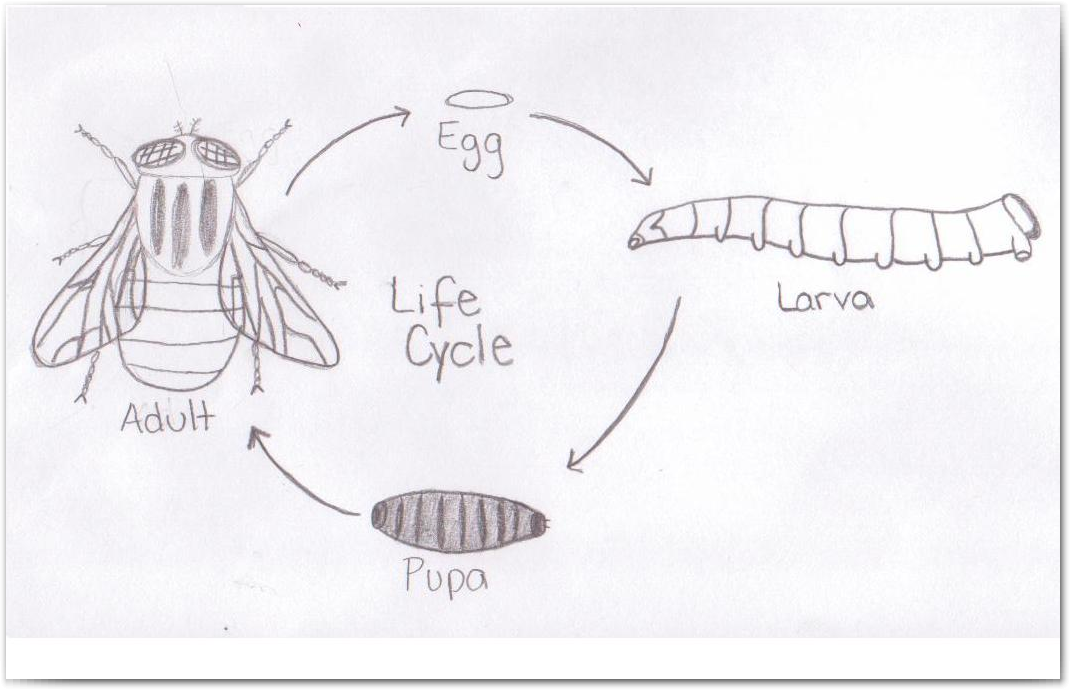
Recently a reader, Imran, posted a comment asking for clarification on concepts such as project life cycle, project phases and project management process groups. After reading his comments, I realized that many others might be having similar doubts and it would be more appropriate to address his questions through a separate blog post rather than responding through comments. In this article, I’m trying to explain 5 key concepts by drawing an analogy between products and human beings. I hope you’ll find it interesting and useful.
Product Life Cycle
Definition
Product Life Cycle is the series of phases that represent the evolution of a product, from concept through delivery, growth, maturity, and to retirement.
Example
If we think of a human being as a product, then the entire life of the human being from the time it’s conceptualized (or conceived) to its death can be considered as its product life cycle.
As every human being has only one life (unless you believe in life after death), every product has one life cycle.
Product Phase (or Product Life Cycle Phase)
Definition
Product Phase is a stage in the life of a product. As mentioned above, the series of phases in the life of the product is known as the Product Life Cycle.
Example
The phases of human life such as prenatal, childhood, adolescence, adulthood and death can be considered as product phases. Product phases are generally sequential and non-overlapping, though you may see some adults behave like children :).
Project Life Cycle
Definition
Project Life Cycle is the series of phases that a project passes through from its initiation to its closure.
Example
Schooling, college education and work life can be considered as projects. There’s only one project life cycle for every project.
Project Phase
Definition
Project Phase is a collection of logically related project activities that culminates in the completion of one or more deliverables.
Example
For a schooling project, each year (grade) of school can be considered as a project phase. In a schooling project, the phases are (usually) sequential, but in real world projects, the project phases can overlap.
Project Management Process Groups
Definition
Project Management Process Groups are a logical grouping of project management inputs, tools and techniques, and outputs. Also see Process Groups vs Knowledge Areas.
Example
Before you enter a new grade, you or your parents (sponsors) identify the need to continue your education, and enroll you into the next grade (initiating). Various aspects (finances, uniforms, books, tuitions, boarding etc.) of your schooling are planned (planning). You attend classes (executing) and teachers evaluate and monitor your progress throughout the year and corrective actions are taken if required (monitoring and controlling). At the end of the year, you take the final exams, get your grades and celebrate (closing).
Usually, each of the 5 project management process groups are repeated for each phase of the project.
I hope this short article helps you get a gist of these common, but often confusing project management concepts. Your comments and suggestions are welcome as usual.
- PMBOK® Guide, 5th Edition
Image credit: By Pyrothansia (Own work) [Public domain], via Wikimedia Commons
9 Comments
Moderated — submissions appear after approval.
- Anonymous imported
Wow nice breakdown.
- Anonymous imported
hi thank you for your useful post. I have a question, why do you say in project phases at this case, schooling has nonsequential phase ? if we consider each year as a phase, we finished one year and start next year, is not sequential ?
- Harwinder Singh imported
Hello Anon., That's a good catch. It was a typo. I've corrected it now. Good to know that someone actually read it :) Thanks for your feedback.
- RAJINI KANTH REDDY imported
It was explained very well. Pretty helpful to understand the basics. Could you tell me what are knowledge areas?
- N.Kumar imported
Excellent example. Thanks.
- Anonymous imported
Fabulous! Very well explained, all fundas clear about it!!
- Anonymous imported
simply great explanation by analogy !! I would say Impressive Transfer of knowledge ;-)
- Anonymous imported
Do you have blog written on new things added in PMBOK 5 related to life cycle - predictive, incremental, Iterative, adaptive etc. Shraddha
- Muhammad Uzair imported
I also faced the same question a number of times, and I like your approach to explain it. However, I have also made an attempt to it in this way in my post (link removed).







![By Pyrothansia (Own work) [Public domain], via Wikimedia Commons](http://upload.wikimedia.org/wikipedia/commons/e/e6/Life_cycle.jpg)