· Harwinder Singh · PMP · 4 min read
Configuration Management System - A Quick Refresher for PMP
An overview of Configuration Management System and Change Management System in the context of Project Management Information System. Configuration Management is focused on the functional or physical characteristics of the "product" (or deliverables of the project).
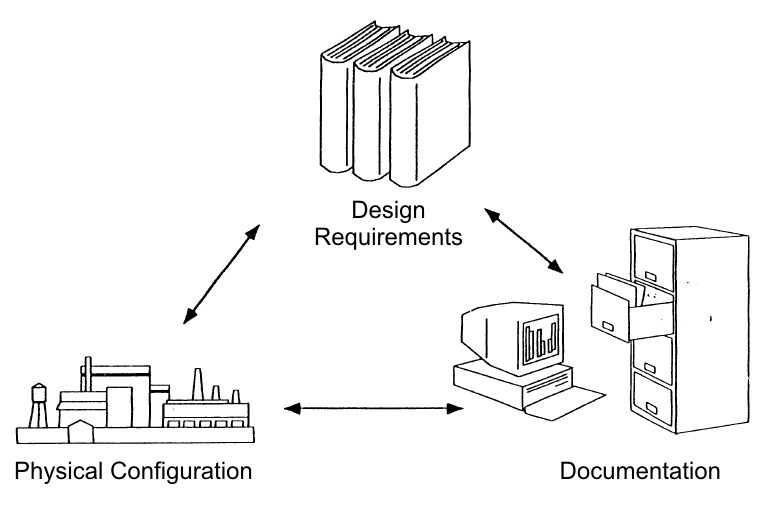 According to the PMBOK® Guide, 5th Edition, Configuration Management System is a subsystem of the overall Project Management System. It is a collection of formal documented procedures used to apply technical and administrative direction and surveillance to: identify and document the functional and physical characteristics of a product, result, service, or component; control any changes to such characteristics; record and report each change and its implementation status; and support the audit of the products, results, or components to verify conformance to requirements. It includes the documentation, tracking systems, and defined approval levels necessary for authorizing and controlling changes.
This definition is self-explanatory, isn’t it? Well not quite. Unfortunately, this is a topic which isn’t explained well in PMP prep guides. Even though most of us are using Configuration Management is some form or another on our projects, many PMPs and PMP aspirants I have talked to, do not understand this topic well. This article is the first in a series of articles that I’ll do Configuration Management System. My aim is to present the information in a clear, concise and practical manner to help you understand this topic well. I may cross the boundaries of the PMP exam curriculum. I hope you will find the information useful.
Key Concepts about Configuration Management System
In this article, I’m listing the main concepts related to Configuration Management System that you need to know for the PMP Certification. I’m not covering any of them in detail. In follow-up articles, I’ll cover some of these points in detail.
- Configuration Management is focused on the functional or physical characteristics of the "product" (or deliverables of the project). Most of us who have worked on projects have used Configuration Management. In the context of IT systems, Configuration Management can be applied to hardware, software and network configurations. Manufacturing companies use complex Product Lifecycle Management (PLM) systems to manage configuration of their products (such as mobile phones, cars, airplanes) throughout the lifecycle of the product.
For those who are interested to learn more, I’m going to cover product configuration in detail in a follow-up article.
- Configuration Management is applied throughout the lifecycle of the product. It extends beyond the boundaries of a project.
- Configuration Management also applies to the "project". Project Configuration Management is a collection of processes, activities, tools and methods to manage the configuration of project management artifacts such as Contracts, Statement of Works, Work Breakdown Structure, Project Management Plan, Risk Register, Work Performance Information, Performance Reports, Metrics, etc. You can refer to Practice Standard for Project Configuration Management from PMI for more details. By the way, this standard is available free of cost to PMI Members.
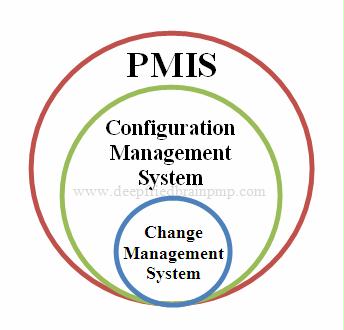
- Configuration Management System is a part of the overall Project Management Information System (PMIS). Change Management System is a subset of the Configuration Management System. Refer to the diagram for a pictorial representation of this concept.
- Configuration Items (CI) are items which are placed under configuration control. It may include product, its components, documentation or project artifacts (examples mentioned above).
- Not all Configuration Items (CI) need to go through formal Change Control process.
- Configuration Management Plan is a subsidiary of the main Project Management Plan.
- Configuration Management Plan defines:
- Configuration Items (items which need to be placed under configuration control)
- Items that require formal change control
- The process for controlling changes to such items (Change Control process)
- Configuration Management System has 4 main aspects:
- Configuration Identification
- Configuration Control
- Configuration Status Accounting
- Configuration Verification and Audit
These have been reviewed in detail in - The Four Components of a Configuration Management System.
- Configuration Control and Change Control are distinct but related activities. Read Configuration Control and Change Control - Similar yet Distinct for more information.
I hope this article gives you a high level overview of the concepts related to Configuration Management System. Stay tuned for at least 3 more articles in this series. Please give me your feedback and let me know if any course correction is necessary.
3-part series on Configuration Management
- Configuration Management System - A Quick Refresher for PMP (you are here)
- Configuration Control and Change Control - Similar yet Distinct
- The Four Components of a Configuration Management System
Image credit: Wikimedia Commons
14 Comments
Moderated — submissions appear after approval.
- Sir Chawlz imported
Thanks, this was very helpful. I've never found a clear description of configuration management and the term as I've seen it in PMI material seem highly euphemistic to me.
- Harwinder Singh imported
Thanks, Sir Chawlz. I'm glad that you found this useful.
- Suresh Babu imported
Harry.. can you quote some tools used for CMS. is version control tool, an example for CMS??
- Harwinder Singh imported
Hello Suresh, Document management systems, source code control systems, Product Lifecycle Management (PLM) systems are examples. But an organization's Configuration Management System may comprise of several such tools. I do plan to cover this in the final article of this series, but haven't been able to get around it for a while. Thanks for bringing this up.
- M B HUssain imported
Too Good Read Rita,PMBOK, Road Trip and HFirst and was still confused what CMS is all about. None of the books mentioned above explains satisfactorily on the subject. Advice how important CMS is with respect to the actual exam
- Anonymous imported
I still consider myself a novice in terms of preparation for PMP. Your explanation definitely made it easier for me to understand.
- John imported
thanks for sharing this wonderful post
- Arun imported
The best explanation I have seen to date for CMS for PMP so far. Non the books I have read covered this so clearly. Thanks a bunch.
- Anonymous imported
Thanks for this article. Provided good insight. I'm still concerned/confused about the hierarchy or relationship between the Config MGMT system and the Change MGMT system. The only mention of it in PMBOK (5th) is on Pg.96. Can you steer me to a PMI-acknowledged reference that nests the change management system within the config management system? Especially considering Wikipedia's article on config managment "break(s) out change control or change management as a separate or stand alone discipline." Thanks!
- Harwinder Singh imported
Please refer to the Practice Standard for Project Configuration Management, Third Edition.
- Quốc Hùng imported
May you please explain why Change management system is a subset of Configuration management system, as Change control and Configuration control are distinct? Thank you!
- Harwinder Singh imported
Hi Quoc Hung, I would have to correct the article to say that Change Control System is a subset of the Configuration Management System. This statement was mentioned in PMBOK 4, when this article was written, but has been removed from PMBOK 5. However, you can still find it in the Practice Standard for Project Configuration Management, Third Edition. Thanks for bringing this up. Best regards.
- Anonymous imported
Hi Harwinder, Its as clear as that. But if you could please explain the relation between Configuration management system and the Change management system especially the Configuration control and change control that would be really helpful. Thanks
- Harwinder Singh imported
Thanks for your feedback. There are other articles in the series that touch upon those topics. Hope you had a chance to read them too.