· Harwinder Singh · PMP · 3 min read
Mnemonics for PMP and CAPM Certifications
Mnemonics and Study Aids for PMP Certification to help memorize ITTO, Process Group and Knowledge Area names, and other project management concepts.
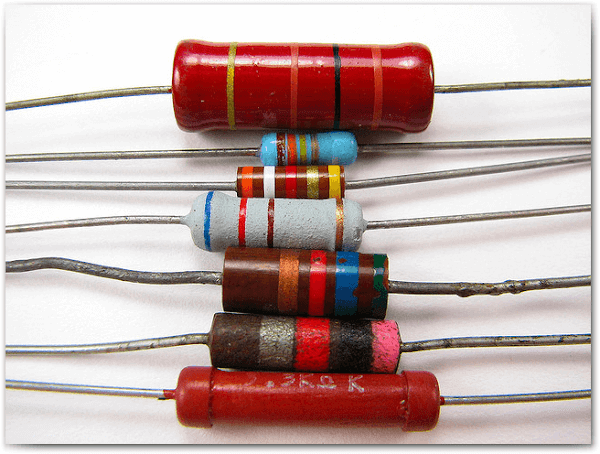
Does PMP Certification require memorization? PMP and CAPM aspirants use mnemonics heavily to memorize everything from Process Groups to Knowledge Areas, Process Names to ITTO’s, and much more. According to Dictionary.com, Mnemonics are something intended to assist the memory, as a verse or formula. Most of us have used mnemonics in some form or another, for exams, work, or other purposes. I still remember the mnemonic - B B Roy of Great Britain has a Very Good Wife - that I learned during my engineering degree program more than 15 years ago. It was used to recall color code sequence for resistors. And who doesn’t remember the acronym (a form of mnemonic) VIBGYOR for the seven colors of the rainbow.
List of Mnemonics for PMP
In this post, I’m not going to share much information with you. Instead, I’m going to invite you - the readers - to share your favorite mnemonics for PMP and CAPM certification exams. I’ll start by sharing mine that I created for my PMP certification way back in 2007. I’ve kept it secret all these years (I know it sounds selfish). It is 100% original and I bet you’ll not find any reference to it preceding this post.
Mnemonic to remember 10 Project Management Knowledge Areas
I used this mnemonic to remember the names of 9 Knowledge Areas in the correct sequence. Later with PMBOK® Guide, 5th Edition, Project Stakeholder Management was added as the 10th Knowledge Area and I updated the mnemonic accordingly. The original mnemonic was:
I Saw The Charming Queen Holding Cream Rose Petals
corresponding to the 9 Knowledge Areas:
- Integration
- Scope
- Time
- Cost
- Quality
- Human Resource
- Communications
- Risk
- Procurements
With the addition of Project Stakeholder Management in PMBOK Guide, 5th Ed, I updated the mnemonic to:
I Saw The Charming Queen Holding Cream Rose Petals Sexily :)
- Integration
- Scope
- Time
- Cost
- Quality
- Human Resource
- Communications
- Risk
- Procurements
- Stakeholder
Update 2018: With the changes in PMBOK® Guide, 6th Edition, I updated the mnemonic to:
International Space Station Crew Quickly Responded (when) Chemical Reaction Produced Smoke
- Integration
- Scope
- Schedule
- Cost
- Quality
- Resource
- Communications
- Risk
- Procurements
- Stakeholder
Mnemonic to remember SPI, CPI, SV, and CV Formulas
People find it hard to remember whether EV goes in the numerator or denominator for SPI / CPI formulae, and whether it comes first or later in the SV / CV formulae. The formulae are:
SPI = EV / PV
CPI = EV / AC
SV  = EV - PV
CV  = EV - AC
The simple mnemonic that I devised to remember it to mentally associate EV with EVerest, yes Mount EVerest, which is the highest mountain in the world. EVerest is always on top (numerator) in SPI / CPI formulae and comes first in the SV / CV formulae.
Mnemonic for Level of Effort (LOE)
I think of Level of Effort as Level “off” Effort i.e. to spread out the work. This helps me to better relate to the true meaning of LOE.
Pro Tip
Before I close, I want to share one small tip related to mnemonics. Mnemonics work best when you create them yourself. Make use of this powerful, handy and time-tested tool to help you memorize or recall practically anything. Over to you now. Go ahead and share your own favorite mnemonics. Keep them coming.
Image credit: Flickr / oskay
29 Comments
Moderated — submissions appear after approval.
- Jo Lynn imported
I used mnemonics for each domain group......plus kinetic learning method. I repeatedly write down the domain group names. They somehow stayed in my memory for quite a long time. The exam has passed for weeks and I can still recall everything. I'm quite surprised about that!
- Harwinder Singh imported
Thanks for sharing your experience, Jo Lynn. I would read up on the Kinetic learning method.
- Naren
What is Kinetic learning method ? Any good example or website address will help.
- Harwinder Singh
@Naren I found information on Kinesthetic learning but not much on Kinetic learning. Hope someone can throw more light on this topic.
- Anonymous imported
Hi Harwinder, This is really brilliant... Hats off to you.. Do you have any more mnemonics related to PMP certification? If yes, can you please share them here?
- Harwinder Singh imported
Thank you! I do not have more at this time. I encourage everyone to contribute their favorite mnemonics on this page.
- Lauren Bright imported
Process Groups: Initiating, Planning, Executing, Monitoring/Controlling, Closing. "I picked early May carnations"
- Harwinder Singh imported
Thanks for your contribution, Lauren. Hope others pitch in as well.
- Swapna Veer imported
For Integration Process: Charter Development, Project Plan Development, Direct and Manage Work, Monitor and Control Work, Close Project or Phase "Could Popcorn Dry My Cellphone"
- Harwinder Singh imported
Hi Swapna - thanks for your contribution. I think you are missing the salt in your popcorn, i.e. Perform Integrated Change Control is not your list :)
- Beth
project scope management/planning People Sing / Plan Scope Mgmt Cats Ring / Collect Requirements Dogs Swing / Define Scope Cows Wing / Create WBS
- Harwinder Singh
Very interesting! Thank you for your contribution, Beth. Hope we get more people to contribute.
- Danielle
I spy six cats quickly running circles right past Sam.
- Harwinder Singh
Danielle - thanks so much for your contribution and enriching this post. Every bit counts.
- Michael Bentley
I have a mnemonic that seems very appropriate. I (Integration) Scope out Schedule Resource Risks Cause (sounds like cost) Competent (Comm) Stateholders Prefer (Procurement) Quality Also when you look at how many processes for each in this order, they form a nice number sequence 7 666 7 43 43 3
- Harwinder Singh
Interesting sequence, Michael. It's very heartening to see the contributions from the community in the last few days. Once the mnemonics get to a sizable mass, I'll compile them together into a downloadable PDF.
- Anthony DiBenedetto
Integration and Scope Cost our Quality Resources to Communicate with the Risk of Procuring Stakeholders I Saw Six Cars Quickly Rip Carols Rear Passenger Side
- Harwinder Singh
Thanks for your contribution
- Neil
Thanks for taking the time to do this. It's very helpful.
- Harwinder Singh
Thanks and I'm glad you found it helpful. If you come across other helpful mnemonics, please do contribute.
- Pratap Bhat
Thanks for writing on this essential topic. To elaborate further on ''Total Float belongs to the project, whereas Free Float belongs to individual activities'' and to remember it better, I like to co-relate the term Free Float with the term ''Free Bird'', which does not disturb the dates of other activities! You can''t think of ''total bird'' now, can you? :)
- Harwinder Singh
Good one, Pratap!
- Juan Vergel
For the 6th edition, I came out with this: International space station costly quality resources communicating real problem solution
- Harwinder Singh
Thanks for your contribution, Juan.
- Steve
I like to draw silly pictures to go with my phrases, even though I don't draw well. The more ridiculous, the better. For example, as I watch my cats watch the bird feeder outside, I drew this: I Saw Sassy Cats Quietly Harassing Combat-Ready Punk-rock Squirrels.
- Harwinder Singh
That's very interesting, Steve. Thank you for your contribution!
- Beth J
Project Integration Management Dog Days Delay My Magic Popped Corn
- Harwinder Singh
That's an interesting submission :) Thank you, Beth!
- Andy
Initiate, Plan, Execute, Monitor+Control, Close = IPEMcC I Pee Every Morning, can't Control